
Multi-Tier Progressive Slot Machines
Every Multi-Tier Progressive machine
9 multi-tier progressive machines on Run the Slots. Tap any title for the full advantage play guide.







About this mechanic
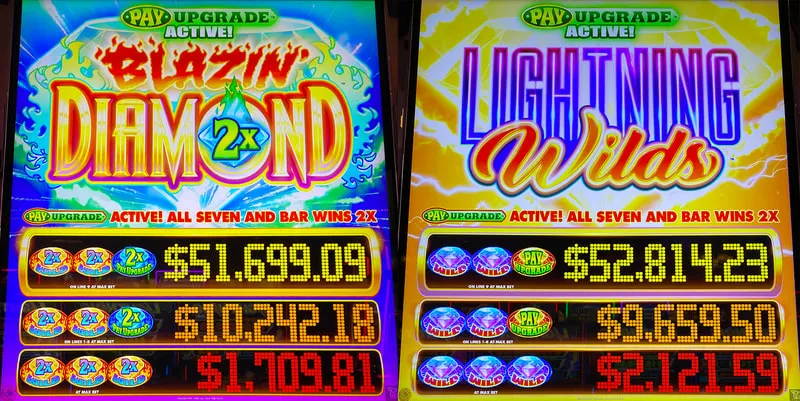
Multi-tier progressive slots stack several jackpot levels — typically Mini, Minor, Major, and Grand — onto a single machine or linked bank. Each tier has its own counter, floor, and (sometimes) ceiling. Because each level rises at its own rate, multi-tier progressives offer multiple independent windows worth playing on the same machine. When one tier sits above breakeven, the machine is worth a session even if the others are flat.
How multi-tier progressive machines work
On a typical multi-tier setup, every wager contributes a small fraction of coin-in to each progressive level. Higher tiers receive smaller contributions, which is why Grands grow slowly and Minis refill almost immediately after each hit. The trigger for each tier is independent — most are awarded via random must-hit-by mechanics, hold-and-spin pickups, or symbol-collection events. A single bonus round can resolve into any tier, including multiple in succession. Examples include Lightning Link's four progressive levels, IGT's Wheel of Fortune jackpots, and Light & Wonder's Jin Long progressive ladder. Tier values are usually displayed prominently above the reels.
Advantage play tactics for multi-tier progressive
Read every tier on every machine during a floor walk — a flat Grand can mask a Major that's worth playing. For each tier, compare the current number to its known floor and ceiling (or its average reset interval if no ceiling exists). Sit when any single tier crosses breakeven; do not require all tiers to be hot. Always bet the level required for full multi-tier eligibility. Note tier reset values for each machine you target — manufacturers sometimes adjust seeds during reconfigurations.
Related glossary terms
Progressive Jackpot
A jackpot that increases with each bet placed, funded by a small percentage of each wager. Progressives can be standalone (single machine) or linked (multiple machines). When a progressive grows high enough above its reset value, the added value can push the total RTP above 100%.
Linked Progressive
A progressive jackpot fed by multiple machines, causing faster jackpot growth than standalone progressives. Linked progressives across a bank of machines or an entire casino floor reach player-favorable thresholds more quickly.
Standalone Progressive
A progressive jackpot fed only by the individual machine, as opposed to a linked progressive shared across multiple machines. Standalone progressives grow more slowly but the counter value is entirely attributable to play on that specific machine.
WAP (Wide Area Progressive)
A progressive jackpot linked across multiple casinos, such as Megabucks. WAPs grow extremely fast due to high volume but are rarely viable for AP because the base game return is very low and the trigger probability per spin is tiny.
Ceiling
The maximum value a must-hit-by progressive can reach before it is forced to pay out. The closer a progressive gets to its ceiling, the higher the expected value of playing that machine.
Floor
The starting or reset value of a progressive jackpot — the lowest point it returns to after a jackpot hit. The distance between the floor and the current counter value indicates how much has been contributed by players since the last hit.
Other mechanics worth scouting
FAQ — Multi-Tier Progressive slot machines
Multi-tier progressive slots stack several jackpot levels — typically Mini, Minor, Major, and Grand — onto a single machine or linked bank. Each tier has its own counter, floor, and (sometimes) ceiling. Because each level rises at its own rate, multi-tier progressives offer multiple independent windows worth playing on the same machine. When one tier sits above breakeven, the machine is worth a session even if the others are flat. On a typical multi-tier setup, every wager contributes a small fraction of coin-in to each progressive level. Higher tiers receive smaller contributions, which is why Grands grow slowly and Minis refill almost immediately after each hit.
Look for the visible cues described above — counters, the number, ceiling values, or filled positions. Cross-reference our list of 9 Multi-Tier Progressive machines below to know which titles to scout. Most properties group similar mechanics together, so once you spot one Multi-Tier Progressive machine, additional machines on the same bank are usually the same family.
Read every tier on every machine during a floor walk — a flat Grand can mask a Major that's worth playing. For each tier, compare the current number to its known floor and ceiling (or its average reset interval if no ceiling exists). Sit when any single tier crosses breakeven; do not require all tiers to be hot. Always bet the level required for full multi-tier eligibility. Note tier reset values for each machine you target — manufacturers sometimes adjust seeds during reconfigurations. Profitability depends on finding machines that are a play during a floor walk and walking away the moment the residual value is harvested. The machines themselves lose by default — the edge comes entirely from selecting the right counter conditions to play through.
Get full guides for every Multi-Tier Progressive machine
Membership unlocks trigger values, machine photos, and step-by-step strategy for every multi-tier progressive machine listed above.
Create Free AccountRun the math on a multi-tier progressive machine
Plug a live number into the Must-Hit-By Calculator to get a go/no-go read before you sit.
Looking for a different mechanic? Browse all mechanic hubs