run the slots
Loading
run the slots
Loading
2026 Strategy Guide
Is slot machine advantage play cheating? Is it legal? Can a casino kick you out for it? This guide answers every legal, moral, and practical question about AP so you can play with full confidence — and full awareness of where the real risks lie.
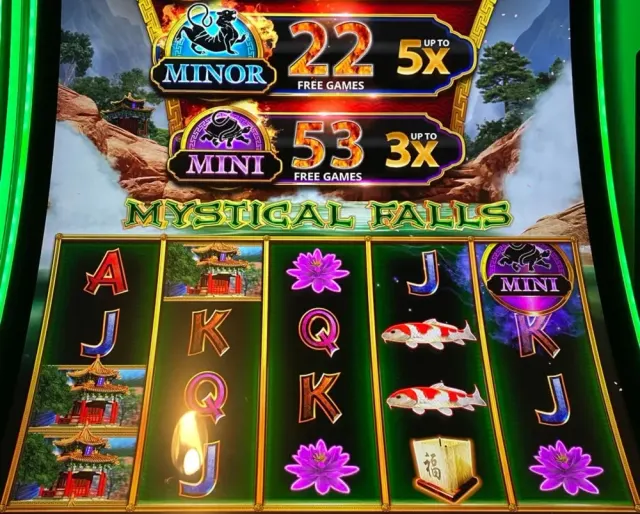
Slot machine advantage play is the practice of identifying machine states where the expected value of continued play is positive — and only playing in those states. The two primary AP methods covered in the beginner AP guide are must-hit-by progressives (where the jackpot must pay before a publicly displayed ceiling) and accumulator machines (where collected symbols are visible on screen).
Both methods rely entirely on observing information the casino chose to display publicly. There is no deception, no device, no collusion with casino employees, and no manipulation of hardware or software. You look at a number on a screen, compare it to a threshold you calculated from public machine data, and decide whether to play. That is the entire activity.
What AP is not: it is not hacking, it is not cheating, it is not exploiting a software bug, and it is not illegal under any US gambling statute. The confusion arises because people conflate “beating the casino” with cheating. They are not the same thing. Counting cards in blackjack is also not cheating — it is using your brain on publicly available information. The same principle applies here across all 200+ documented machine types.
No US state has a law that prohibits a player from using publicly visible machine information to inform their betting decisions. Gaming statutes that do create criminal liability for players focus on three specific categories: using a device to predict outcomes, physically tampering with machine hardware, and defrauding the casino through misrepresentation.
Standard slot machine AP falls into none of these categories. Reading a progressive meter displayed on the machine face is not using a prediction device. Counting symbols shown on screen is not tampering. Placing a bet after calculating EV from public information is not misrepresentation. The legal analysis is straightforward: if the information is on the machine screen and accessible to any patron walking past, using it is not a crime.
See the full must-hit-by complete guide for a detailed breakdown of how these machines work and why the information they display is intended to be publicly visible.
The fact that AP is legal does not mean casinos are powerless. Casinos are private property, and private property owners have broad rights to exclude people for reasons that do not constitute illegal discrimination. A casino can ask you to stop playing a specific machine type, restrict you to certain areas, or ask you to leave entirely — without any legal requirement to explain why.
When this happens, the correct response is to comply immediately and leave the property. Do not argue. Do not explain your activity. Do not ask for justification. Simply leave. The casino is exercising a property right — not making an accusation of criminal activity. Complying is not an admission of wrongdoing; it is the only sensible response to a property owner invoking their right of exclusion.
Being excluded from one property does not affect your right to play at other casinos. Exclusions are property-specific unless you are entered into a state-level exclusion registry (which requires a formal process and is typically voluntary or court-ordered, not triggered by AP). See the casino walk-in strategy for how to conduct yourself in a way that minimizes exclusion risk.
While standard AP is clearly legal and ethical, the broader AP community includes practices that sit in murkier territory. Understanding where the lines are helps you stay on the right side of both the law and your own values.
Team play and information sharing
Organized teams where players share machine states in real time and divide labor across a casino floor are legal but attract significant casino attention. Casinos can and do bar teams from their properties. There is no law against it, but the risk of exclusion is much higher for visible team operations than for solo players. Information sharing networks and paid tip services are similarly legal but similarly likely to result in casino awareness.
Exploiting posted meter errors
Occasionally a casino misconfigures a machine, posting incorrect ceiling values that make the machine appear +EV when it is not — or making it genuinely +EV to an extreme degree due to an error. Playing a machine with a visibly posted value is legal. Whether it is ethical to extract large amounts from a clear error is a personal judgment call. In practice, casinos will void any jackpot they can identify as resulting from a configuration error.
Holding machines without playing
Sitting at a +EV machine without inserting money — to hold it until a partner arrives, or to prevent competitors from playing it — is legal but creates social friction and can draw floor attention faster than actual play. It is a practice most experienced AP players avoid because the reputational and exclusion cost is high relative to the marginal benefit.
Sharing specific machine locations publicly
Publicly sharing the exact casino location of a hot machine depletes it quickly and reduces its long-term value to everyone. The AP community norm is to share methods and game types freely, but to keep specific location intelligence within trusted circles. This is community ethics rather than legal ethics — no rule prohibits public sharing, but experienced players understand why restraint serves the community.
The most practical ethical consideration for AP players is not legality — it is longevity. Casinos that identify active AP players will restrict or exclude them. The longer you can play at a given property without drawing heat, the more value you extract over time. These comportment principles apply to all accumulator and must-hit-by AP strategies.
Slot machine advantage play is legal. It is ethical. It is not cheating. It uses publicly posted information and straightforward math to identify situations where the casino’s own machine setup creates a statistical edge for the player. No law prohibits this. No moral principle is violated by it.
The real risk of AP is not legal — it is practical. Casinos can exclude you from their property if they identify you as an advantage player. They do not need to prove anything, and they do not need to give a reason. This is a property rights matter, not a criminal matter. The correct response to exclusion is always to comply and leave.
The AP player who lasts the longest at any given property is not the most aggressive player — it is the most disciplined and least conspicuous one. Play by the rules, behave like a normal patron, and let the math work over time. See the advantage play FAQ for answers to the most common questions new AP players have about how this all works in practice.
Yes. Slot machine advantage play as practiced on this site — reading visible meters, counting displayed symbols, calculating expected value from public machine information — is entirely legal in every US state where casino gambling is permitted. No statute prohibits a player from using their eyes and their math. The activity only becomes illegal when a player uses a device to predict outcomes (prohibited under gaming device statutes in most states) or physically manipulates the machine hardware. Observing public information is not a crime.
No. Cheating requires deception, manipulation, or use of prohibited devices. Advantage play on slot machines involves none of these. You are observing information the casino publicly displays — progressive meter values, symbol counts on accumulator machines — and using math to decide whether to play. The casino posts that information openly. Using it is not cheating any more than reading a restaurant menu before ordering. The casino may prefer you did not do this, but preference is not the same as right.
Yes. Casinos are private property. They can ask any patron to leave and ban them from returning for any reason that does not violate anti-discrimination law. This is called exclusion or trespass — not arrest, not prosecution, just removal from the property. Being asked to leave a casino for advantage play is not a criminal matter. It is a civil property rights matter. You leave when asked, and you do not return. Some AP players are never excluded. Others are asked to leave specific machine types while remaining welcome to play other games. It varies by property and by how visible your AP activity is.
In the casino AP context, trespass means the casino has formally notified you that you are not welcome on their property and you return anyway. The first step is typically a verbal or written exclusion notice from casino security. If you return after receiving that notice, you are trespassing — which is a criminal matter in most jurisdictions. This is why AP players who are excluded from a property take the exclusion seriously: continuing to return escalates a civil matter into a criminal one. Always comply with exclusion notices.
Not for the core activity of reading meters and doing math. You can get in legal trouble if you return to a casino after receiving a formal exclusion notice (trespass), if you use a device to assist in outcome prediction (gaming device laws), or if you physically tamper with a machine (machine tampering statutes). None of these apply to standard AP practice. The legal risk from AP slots, when conducted properly, is essentially zero. The practical risk is exclusion from specific properties.
Yes. Advantage play on slot machines is ethical by any reasonable standard. You are not deceiving anyone. You are not taking anything that was not offered. The casino sets the machine parameters, displays the meter publicly, and accepts all bets. When you find a +EV situation and play it, you are doing exactly what the casino's own setup invites. The casino prices some machines in a way that creates positive expected value in certain states — that is a business decision they made. Acting on public information in your own interest is not a moral failing. Across all 200+ machine types in our guides, every AP method relies on observing information the casino chose to make visible.
Related Resources
Run the Slots gives you the machine guides, EV calculators, and AP playbooks for 200+ documented slot machines — everything you need to find the edge and extract it responsibly.
View Pricing