
Slot Machine Advantage Play




Learn which conditions matter, then try the free Buffalo Link guide or check a monetary must-hit-by progressive with the calculator.
What Is Advantage Play?
Advantage play (often abbreviated “AP”) is the practice of only gambling when you have a mathematical edge over the casino. In table games, this might mean card counting in blackjack or exploiting promotional rules. On slot machines, it means identifying specific situations where the expected return exceeds 100% — where the math is in your favor.
This is not a “system” for beating random spins. No betting pattern or timing trick can overcome a game that loses by default. Instead, advantage play on slots focuses on game mechanics that create temporary windows of opportunity — moments when the machine’s own rules tip the math in the player’s favor.
If you are brand new to this concept, start with our introduction to advantage play for a quick overview before diving into the specifics below.
A stated ceiling limits the trigger. Check the meter rate and game rules before estimating its value.
A relevant state carries between plays. Check whether it belongs to a particular bet or denomination.
Banked spins can carry into a later feature. The remaining trigger cost still matters.
How Slot Machine Math Works
Every slot machine is programmed with a return to player (RTP) percentage. For illustration, 92% RTP means an average of $92 returned per $100 wagered over a large number of plays, not each session. The remaining 8% is the house edge — the casino’s long-term profit margin.
A game with a house edge has a negative expected return for the player. A recent losing streak does not make an independent random spin due to win. A persistent feature is a different question: it must actually carry a relevant state between plays under that game’s rules.
However, some modern slot machines include stateful features that persist between players. When a previous player leaves progress behind on the machine, the effective RTP for the next player changes. If enough value has been banked, the expected return can exceed 100%. This is the foundation of slot machine advantage play.
The three main categories of exploitable mechanics are must-hit-by progressives, persistent state counters, and free games accumulators. Each works differently, and each requires a specific approach to identify when a machine has crossed into a play.
Must-Hit-By Progressives


A must-hit-by (MHB) progressive is a jackpot that must pay by its stated ceiling. Check the game rules for the applicable jackpot, bet and denomination. A large jackpot without a stated must-hit-by limit is a different mechanic.
Here is the key insight: as the progressive counter climbs closer to its ceiling, the expected return may improve. A break-even estimate compares the expected award with the cost of reaching it; proximity to the ceiling alone is not enough.
Calculating the exact break-even point requires knowing the base RTP, the progressive meter contribution rate, the current amount and ceiling, and how the trigger is selected. Our must-hit-by calculator estimates the result from your inputs. Its midpoint option assumes a uniform trigger distribution; unknown payback or meter rates make the estimate uncertain.
For a deeper explanation of how these progressives work and how to evaluate them, read our full article on must-hit-by progressives explained — or start with how to read a slot machine meter, which is the skill every read on this page rests on.
A different kind of counter
Buffalo Link has a must-hit-by buffalo collection feature. Its green counter counts collected symbols, not dollars. Use its free guide; do not enter that count into the monetary progressive calculator.
Persistent State & Counter Games
Some slot machines track progress toward a bonus feature using an on-screen counter, number, or collection mechanic. When a player walks away before reaching the trigger, that progress may remain for the next player on the same eligible bet and denomination. Verify what persists in the game rules. These are called persistent state or accumulator games.
A useful state might be a counter, collected symbols, lights or a board configuration. More progress is not automatically better: the remaining cost, feature value and exact qualifying condition depend on the game.
Popular examples include games where you collect symbols (coins, gems, orbs) to fill a counter. Each collected symbol brings you closer to a bonus round with a known average payout. The critical question is always: how much will it cost me, on average, to collect the remaining symbols?
This calculation depends on the symbol hit rate (how often collecting symbols appear), your bet size, and the expected bonus value. The machine’s own guide carries the threshold to read its counter against — the must-hit-by calculator does not take a symbol hit rate and cannot price an accumulator. For a more detailed walkthrough, see our guide on trigger points and when to play.
- Counter games: A visible number ticks up with qualifying symbols; the game rules explain how the feature triggers.
- Collection games: Symbols fill slots on a board or grid. Completing a row, column, or full board triggers a feature.
- Multiplier escalators: A multiplier value increases with certain outcomes and persists between sessions, applying to the next bonus.
Free Games Accumulators

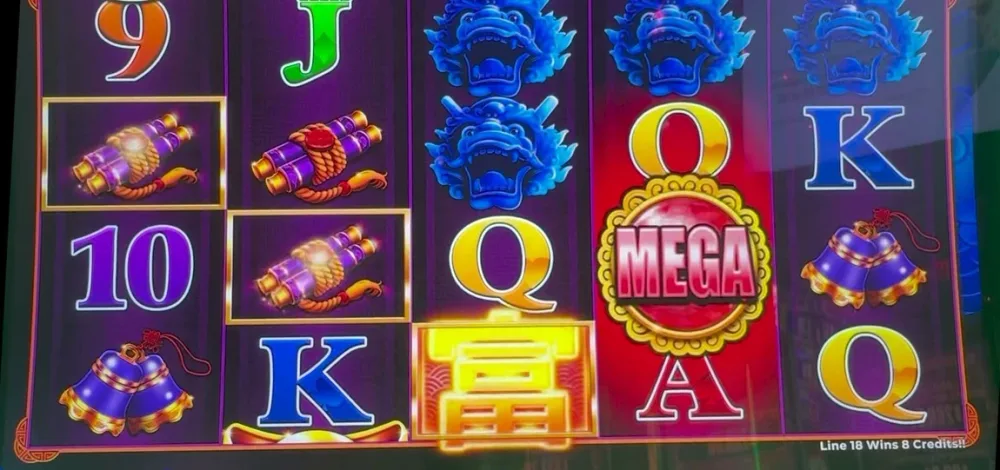

A subset of persistent state games specifically bank free spins or bonus credits that carry over between players. Check whether the displayed total persists, which bet it belongs to, and what actually activates the feature. A free-spins bonus on its own is not proof of banked value.
The advantage here is that someone else paid the cost of accumulating those free games. That value must be evaluated against the remaining cost of activating the feature. A visible bank alone does not establish a qualifying condition.
Evaluating these opportunities requires understanding the average value of each free spin at a given bet level, the cost to trigger the bonus feature, and how many free games are already banked. Browse the free-games accumulator guides for machine-specific examples. Buffalo Link’s collection counter belongs to the must-hit-by example above, not this category.
The key metrics to assess are:
- Banked value: How many free games, credits, or multiplier levels have been accumulated?
- Trigger cost: On average, how much does it cost to activate the bonus feature from the base game?
- Feature EV: What is the average payout of the bonus feature, factoring in the banked extras?
- Net EV: Feature EV minus trigger cost. If this number is positive, it is a play.
Tools & Resources
Advantage play is math-driven, not instinct-driven. To consistently find machines that are a play, you need the right tools and information:
AI Scanner
Photograph a supported machine to help identify it and check the visible condition against your available guide.
MHB Calculator
Estimate a monetary progressive using its current amount, ceiling, meter rate and base-game payback.

Machine List
Browse all 200+ advantage play slot machines with searchable filters by mechanic, manufacturer, and risk level.
Casino Guides
23,000+ venues worldwide, plus profiles of the flagship casinos with the AP machines worth looking for on a floor like theirs.
Beyond calculators, you need machine-specific knowledge: which games have exploitable mechanics, what the trigger points are, and where to look on the screen. Run the Slots maintains detailed guides for 200+ machines with photos, trigger values, and step-by-step instructions. You can browse all guides here.
Getting Started
If you are new to slot machine advantage play, here is a practical path forward:
- Learn the fundamentals. Read our intro to advantage play and MHB guide to understand the core concepts.
- Study a specific game. Pick one machine type — such as Buffalo Link — and learn exactly what to look for and when to play.
- Scout before you play. Walk the casino floor looking at machines before committing any money. Check counters, numbers, and progressive values against the qualifying conditions in the exact machine guide.
- Use the right tool. For a monetary must-hit-by progressive with known inputs, use the MHB calculator to inspect the estimate and its assumptions. For other mechanics, follow the guide’s condition; a calculator result does not replace it.
- Track your results. Keep records of what you played, the counter values, your cost to trigger, and the outcome. Over time, this data confirms whether your approach is working.
See the condition for yourself
Buffalo Link is free to read, including the photos and qualifying condition. No account needed.
Open free guideFrequently Asked Questions
Can a slot machine's visible state matter?
On some games, a persistent counter, collection or bonus state changes the value of the next play. Match the exact game, bet and denomination to its guide. A familiar title or a large jackpot alone does not establish an advantage.
What is a must-hit-by feature?
It is a jackpot or feature with a stated upper limit for triggering. The display may count money, symbols or another game-specific quantity. Buffalo Link's free guide covers its buffalo collection counter; it is not a dollar progressive.
Can the calculator evaluate every machine?
No. The must-hit-by calculator models monetary progressives using the current amount, ceiling, meter rate and base-game payback, with an assumption about the trigger point. Its estimate is only as reliable as those inputs. Use the machine guide for symbol collections, visual states and other mechanics.
Does a qualifying condition guarantee a win?
No. Expected value is an average across repeated opportunities. A qualifying setup can still lose money, and a previous win does not predict the next result.
Does RTP tell me what I will get back this session?
No. RTP describes an average over a large number of plays. It is not a promise of a session return, and it does not tell you when a bonus will trigger.
Which guide can I read without an account?
Buffalo Link is free from start to finish, with its photos and qualifying condition. Other guides have public previews; their detailed conditions require the appropriate guide access.